Buy digi4equality.eu ?
We are moving the project
digi4equality.eu .
Are you interested in purchasing the domain
digi4equality.eu ?
domain@kv-gmbh.de · 0541-91531010
Buy digi4equality.eu ?
What is the correct conjugation?
The correct conjugation of a verb depends on the subject of the sentence and the tense being used. In English, regular verbs typically follow a pattern of adding -ed to form the past tense (e.g., walk becomes walked). Irregular verbs, on the other hand, have unique conjugations that do not follow a set pattern (e.g., go becomes went). It is important to pay attention to the subject of the sentence and the tense being used in order to correctly conjugate a verb. **
What conjugation does "dare" have?
"Dare" is a regular verb in Italian and belongs to the second conjugation. In the present tense, it is conjugated as follows: io do, tu dai, lui/lei dà, noi diamo, voi date, loro danno. **


Similar search terms for Conjugation
Top-Angebote
Products related to Conjugation:
-
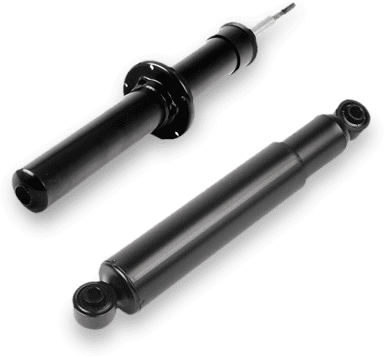
Magnum Technology AG0547MT Shock absorberShock Absorber Design: Suspension Strut; Shock Absorber System: Twin-Tube; Shock Absorber Type: Gas Pressure; Parameter: SFE30X; Fitting Position: Front Axle Right; Shock Absorber Mounting Type: Top pin; Suspension: for vehicles with standard suspension; for OE number: 54661-2L000, 54661-2L100, 54661-2L200, 54661-2L500, 54661-2L60051,99 £*Shipping: 8,45 £Secure redirect to the provider
-
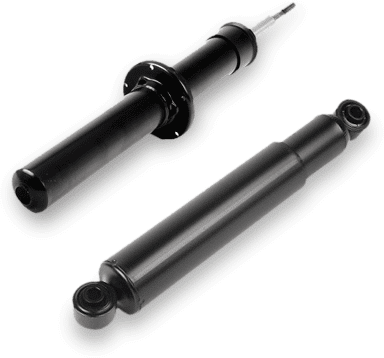
Magnum Technology M0122 Shock absorberFitting Position: Rear Axle, Front Axle Left, Front Axle Right; Shock Absorber Type: Oil Pressure; Shock Absorber Mounting Type: Top eye, Bottom eye; Length 2 [mm]: 520,8, 865,5; Shock Absorber Design: Telescopic Shock Absorber155,98 £*Shipping: 8,45 £Secure redirect to the provider
-
Magnum Technology APM025MT Shock absorberShock Absorber Type: Oil Pressure; Shock Absorber Mounting Type: Top yoke; Shock Absorber Design: Telescopic Shock Absorber; Fitting Position: Rear Axle Left; Vehicle Equipment Line/Trim Level: Airmatic; Braking/Driving Dynamics: for vehicles with ADS407,99 £*Shipping: 1,99 £Secure redirect to the provider

-
What is conjugation in German?
Conjugation in German refers to the process of changing the form of a verb to match the subject of the sentence. This means that the verb will have different endings depending on whether the subject is "I," "you," "he/she/it," "we," or "they." Conjugation is an important aspect of German grammar as it helps to indicate who is performing the action in a sentence. It is essential for learners of German to understand how to conjugate verbs in order to communicate effectively in the language. **
-
How do I distinguish between the verbs of the E-conjugation and the consonant conjugation?
In Old Norse, the E-conjugation verbs typically end in -a in the infinitive form, while the consonant conjugation verbs end in -a, -i, or -u. Additionally, the E-conjugation verbs have a stem vowel that changes between the present and past tense, while the consonant conjugation verbs have a stem vowel that remains the same. It is also important to note that there are irregular verbs in both conjugations that do not follow these patterns. Therefore, it is important to study and memorize the specific conjugation patterns for each verb. **
-
What does the consonantal conjugation mean?
Consonantal conjugation is a grammatical feature found in Semitic languages, where the root of a verb consists of consonants only, and the vowels are added to indicate different tenses, moods, and aspects. This type of conjugation is characterized by changes in the vowels within the root consonants to convey different meanings. Consonantal conjugation allows for a high degree of flexibility and complexity in verb forms, making it a key feature of Semitic language grammar. **
-
What is the conjugation in German?
Conjugation in German refers to changing the form of a verb to match the subject of a sentence. This means adjusting the verb's ending based on the person (I, you, he/she/it, we, you all, they) and tense (present, past, future). German verbs can have different conjugations depending on these factors, making it important to learn the various verb forms to communicate accurately in the language. **


Is there a language without conjugation?
Yes, there are languages without conjugation. For example, Chinese is a language that does not have verb conjugation. In Chinese, verbs remain the same regardless of the subject or tense. Instead, time expressions or context are used to indicate when an action took place. **
What is the conjugation for French adjectives?
In French, adjectives must agree in gender (masculine/feminine) and number (singular/plural) with the noun they describe. To conjugate an adjective, you add an -e for feminine and an -s for plural. For example, the adjective "petit" (small) would become "petite" in its feminine form and "petits" in its plural form. **
Top-Angebote
Products related to Conjugation:
-
SAGE Publications A Little Guide for Teachers: Diversity in Schools (A Little Guide for Teachers)A Little Guide for Teachers: Diversity in Schools aims to provide starting points for teachers and leaders in creating a curriculum, either across disciplines or within subjects, that is as deep and diverse as their students. The Little Guide for Teachers series is little in size but BIG on all the support and inspiration you need to navigate your day to day life as a teacher. · Authored by experts in the field · Easy to dip in-and-out of · Interactive activities encourage you to write into the book and make it your own · Fun engaging illustrations throughout · Read in an afternoon or take as long as you like with it!12,99 £*Shipping: 2,99 £Secure redirect to the provider
-
Youfap Market DIY Digital Cyber Hourglass Birthday Gift, Interactive LED Hourglass For Kids, Cyber Style With Glowing Technology square BlueTransform the ordinary into something extraordinary with the DIY Digital Cyber Hourglass! This innovative toy brings a futuristic glow to any room, making it the perfect birthday gift for kids who love unique, techinspired gadgets. With its striking...59,97 $*Shipping: 0,00 $Secure redirect to the provider
-
Magnum Technology AG0547MT Shock absorberShock Absorber Design: Suspension Strut; Shock Absorber System: Twin-Tube; Shock Absorber Type: Gas Pressure; Parameter: SFE30X; Fitting Position: Front Axle Right; Shock Absorber Mounting Type: Top pin; Suspension: for vehicles with standard suspension; for OE number: 54661-2L000, 54661-2L100, 54661-2L200, 54661-2L500, 54661-2L60051,99 £*Shipping: 8,45 £Secure redirect to the provider
-
Magnum Technology M0122 Shock absorberFitting Position: Rear Axle, Front Axle Left, Front Axle Right; Shock Absorber Type: Oil Pressure; Shock Absorber Mounting Type: Top eye, Bottom eye; Length 2 [mm]: 520,8, 865,5; Shock Absorber Design: Telescopic Shock Absorber155,98 £*Shipping: 8,45 £Secure redirect to the provider
-
What is the correct conjugation?
The correct conjugation of a verb depends on the subject of the sentence and the tense being used. In English, regular verbs typically follow a pattern of adding -ed to form the past tense (e.g., walk becomes walked). Irregular verbs, on the other hand, have unique conjugations that do not follow a set pattern (e.g., go becomes went). It is important to pay attention to the subject of the sentence and the tense being used in order to correctly conjugate a verb. **
-
What conjugation does "dare" have?
"Dare" is a regular verb in Italian and belongs to the second conjugation. In the present tense, it is conjugated as follows: io do, tu dai, lui/lei dà, noi diamo, voi date, loro danno. **
-
What is conjugation in German?
Conjugation in German refers to the process of changing the form of a verb to match the subject of the sentence. This means that the verb will have different endings depending on whether the subject is "I," "you," "he/she/it," "we," or "they." Conjugation is an important aspect of German grammar as it helps to indicate who is performing the action in a sentence. It is essential for learners of German to understand how to conjugate verbs in order to communicate effectively in the language. **
-
How do I distinguish between the verbs of the E-conjugation and the consonant conjugation?
In Old Norse, the E-conjugation verbs typically end in -a in the infinitive form, while the consonant conjugation verbs end in -a, -i, or -u. Additionally, the E-conjugation verbs have a stem vowel that changes between the present and past tense, while the consonant conjugation verbs have a stem vowel that remains the same. It is also important to note that there are irregular verbs in both conjugations that do not follow these patterns. Therefore, it is important to study and memorize the specific conjugation patterns for each verb. **
Similar search terms for Conjugation
-
Magnum Technology APM025MT Shock absorberShock Absorber Type: Oil Pressure; Shock Absorber Mounting Type: Top yoke; Shock Absorber Design: Telescopic Shock Absorber; Fitting Position: Rear Axle Left; Vehicle Equipment Line/Trim Level: Airmatic; Braking/Driving Dynamics: for vehicles with ADS407,99 £*Shipping: 1,99 £Secure redirect to the provider
-
Magnum Technology SB132 Coil springFitting Position: Rear Axle; Parameter: E; Spring Design: Coil Spring; Thickness 1 [mm]: 13,2; Outer Diameter [mm]: 121; Length [mm]: 377; Diameter: 13,25; Vehicle Equipment: for vehicles with trailer hitch; Suspension: for vehicles without sports suspension99,98 £*Shipping: 8,45 £Secure redirect to the provider
-
Youfap Market DIY Digital Cyber Hourglass Birthday Gift, Interactive LED Hourglass For Kids, Cyber Style With Glowing Technology square RedTransform the ordinary into something extraordinary with the DIY Digital Cyber Hourglass! This innovative toy brings a futuristic glow to any room, making it the perfect birthday gift for kids who love unique, techinspired gadgets. With its striking...59,97 $*Shipping: 0,00 $Secure redirect to the provider
-
What does the consonantal conjugation mean?
Consonantal conjugation is a grammatical feature found in Semitic languages, where the root of a verb consists of consonants only, and the vowels are added to indicate different tenses, moods, and aspects. This type of conjugation is characterized by changes in the vowels within the root consonants to convey different meanings. Consonantal conjugation allows for a high degree of flexibility and complexity in verb forms, making it a key feature of Semitic language grammar. **
-
What is the conjugation in German?
Conjugation in German refers to changing the form of a verb to match the subject of a sentence. This means adjusting the verb's ending based on the person (I, you, he/she/it, we, you all, they) and tense (present, past, future). German verbs can have different conjugations depending on these factors, making it important to learn the various verb forms to communicate accurately in the language. **
-
Is there a language without conjugation?
Yes, there are languages without conjugation. For example, Chinese is a language that does not have verb conjugation. In Chinese, verbs remain the same regardless of the subject or tense. Instead, time expressions or context are used to indicate when an action took place. **
-
What is the conjugation for French adjectives?
In French, adjectives must agree in gender (masculine/feminine) and number (singular/plural) with the noun they describe. To conjugate an adjective, you add an -e for feminine and an -s for plural. For example, the adjective "petit" (small) would become "petite" in its feminine form and "petits" in its plural form. **
* All prices are inclusive of VAT and, if applicable, plus shipping costs. The offer information is based on the details provided by the respective shop and is updated through automated processes. Real-time updates do not occur, so deviations can occur in individual cases. ** Note: Parts of this content were created by AI.