Buy digi4equality.eu ?
We are moving the project
digi4equality.eu .
Are you interested in purchasing the domain
digi4equality.eu ?
domain@kv-gmbh.de · 0541-91531010
Buy digi4equality.eu ?
What is the difference between frequency modulation and amplitude modulation?
Frequency modulation (FM) and amplitude modulation (AM) are two different methods used in radio broadcasting to carry a signal. The main difference between the two is how they vary the carrier wave to transmit information. In AM, the amplitude of the carrier wave is varied in proportion to that of the input signal, while in FM, the frequency of the carrier wave is varied. FM is known for its better sound quality and resistance to noise, while AM is simpler and has a longer range. **
What is the difference between amplitude modulation and frequency modulation?
Amplitude modulation (AM) is a method of encoding information on a carrier wave by varying its amplitude, while frequency modulation (FM) encodes information by varying the frequency of the carrier wave. In AM, the amplitude of the carrier wave is directly proportional to the amplitude of the input signal, whereas in FM, the frequency of the carrier wave is varied in proportion to the amplitude of the input signal. FM is less susceptible to noise and interference compared to AM, making it a more reliable method for transmitting information over long distances. **

Similar search terms for Modulation
Top-Angebote
Products related to Modulation:
-
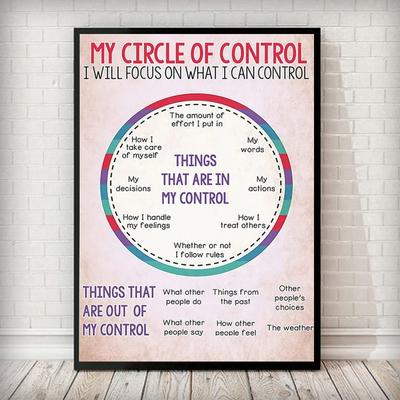
Uplifted Finds The Control Circle Archetype Social Worker Empowerment Canvas Executive Office & Wellness Sanctuary Decor 13 X 18 Cm No Frame"Inaugurate a grounding ""MindfulnessSanctuary"" energy in your environment with our ""Control Circle"" Archetype Canvas. This premium Social Worker and Mental Health professional print is the ultimate designer solution for creating a ""ClinicalModern"" or..."41,97 $*Shipping: 0,00 $Secure redirect to the provider
-
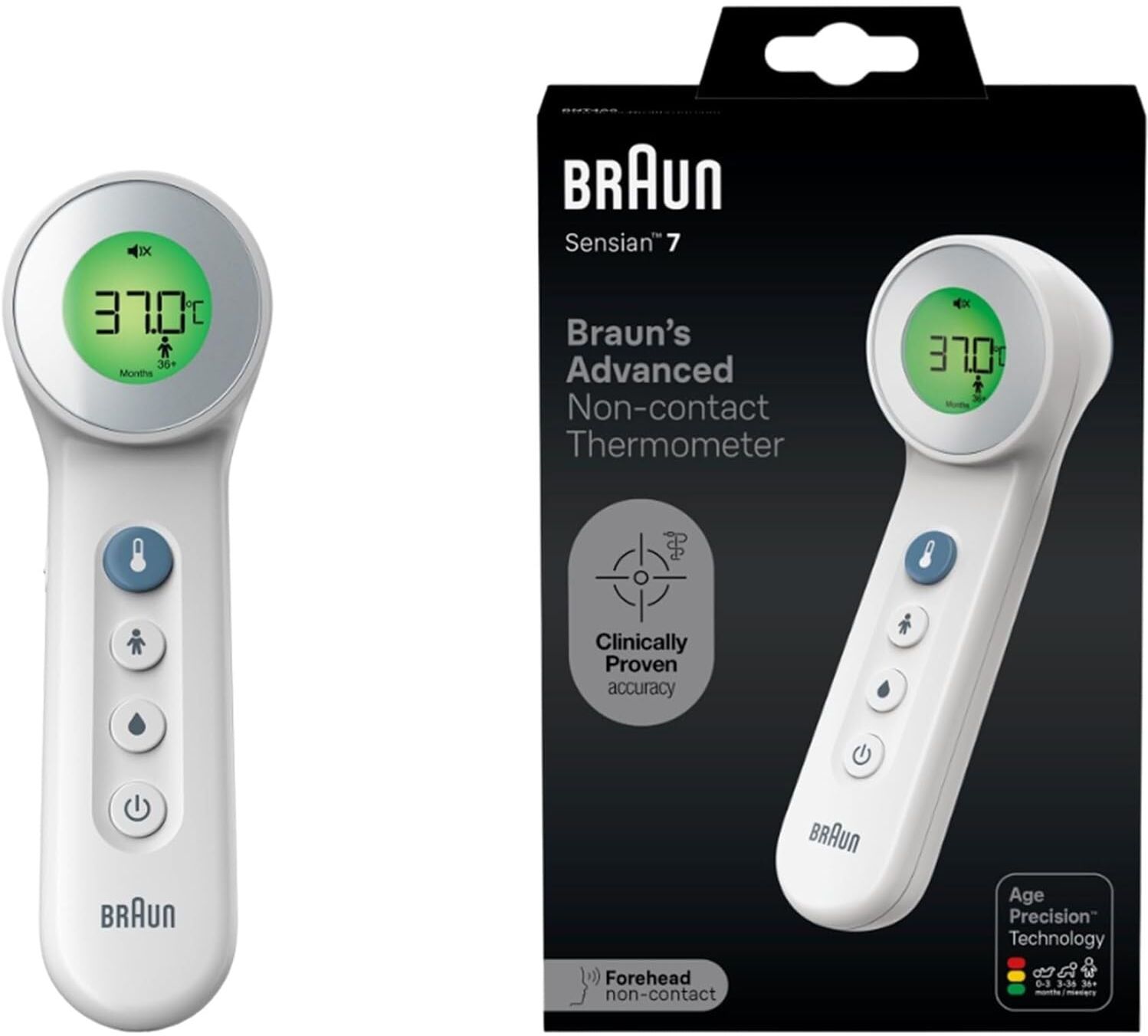
Braun Sensian 7 Forehead non-contact thermometer - Age Precision Technology - 3-in-1 Colour-Coded Digital Display - Baby and Child Friendly - BNT400B, New✅ Braun Sensian 7 Forehead Thermometer – BNT400B Model: BNT400B Type: Non-Contact Forehead Thermometer Technology: Age Precision™ Use: Baby, Child & Adult Take the stress out of temperature checks with the Braun Sensian 7 BNT400B Forehead Thermometer – the smart, gentle, and hygienic way to monitor your family’s health. ✅ No-Touch & Touch Mode Designed for maximum convenience, this thermometer offers dual measurement modes : No-touch mode : Read temperature without disturbing your child (ideal for sleeping babies). Touch mode : Simply place it gently on the forehead for a quick reading. ✅ Age Precision™ Technology Not all fevers are the same across age groups. With Braun’s unique Age Precision™ setting, you can select the age of the person (0-3 months, 3-36 months, or 36+ months), and the thermometer will interpret the reading accordingly to give a more accurate guidance. ✅ Colour-Coded Fever Guidance Quickly understand the result with a colour-coded digital display : ✅ Green – Normal temperature ⚠️ Yellow – Elevated temperature ❗ Red – High fever Perfect for giving you instant peace of mind when you need it most. ✅ 3-in-1 Functionality A truly versatile health device: Forehead temperature reading Object temperature – Check baby’s bottle, food, or bathwater Room temperature – Ensure the nursery is just right ✅ Silent Mode for Night-Time Checks Use the silent mode and backlit display to take readings in the dark without waking your child – ideal for late-night checks. ✅ Fast & Accurate Readings Delivers a precise result in just 2 seconds , powered by Braun’s trusted German-engineered sensor technology for clinical accuracy. ✅ Hygienic & Safe No probe covers needed Non-invasive and gentle – Ideal for babies and toddlers Easy to clean and use daily ✅ Ideal For: Parents with babies, toddlers, and young children Home use for all family members Safe, quick temperature checks without stress or discomfort Make health checks easier, faster, and more accurate with the Braun Sensian 7 BNT400B – your trusted partner in family wellness.37,49 £*Shipping: 0,00 £Secure redirect to the provider
-
Usborne All About Feelings, Friends and Families My First Books 5 Book Set by Felicity Brooks – Feelings, Families, Diversity & Educational Learning CTitles In this Set All About Feelings: All About Families: All About Diversity: All About Friends: All About Worries and Fears: All About Feelings: How are you feeling today? This lively and engaging exploration of emotions helps young children learn to answer this important question. Topics covered include learning to describe feelings, how your feelings can change, and being kind to yourself. All About Families: What do families look like? Who’s in your family? And how can families change? With delightful illustrations, this glorious celebration of family diversity talks about lone-parent families, adoptive, foster, divorced, remarried, and mixed race families, and lots, lots more, showing little children that families come in all shapes and sizes. All About Diversity: This dynamic and joyous exploration of difference helps young children learn to respond in a kind and equal way to everyone, regardless of shape, size, age, physical and mental ability, gender, ethnicity, beliefs, language, culture, background, and so on. With topics ranging from clothes, music and food to homes, festivals and families. All About Friends: Why do we need friends? How can we make friends? And what makes a good friend? This charmingly illustrated book explores the benefits of having friends, looking at different types of friendships, and what happens when friends fall out and make up. All About Worries and Fears: There can be a lot to worry about when you are little, from monsters under the bed to Monday's maths test, but one person's scary spider is another's perfect pet, so how can we learn to stop everyday fears and worries from growing out of proportion or even overwhelming us?18,99 £*Shipping: 2,99 £Secure redirect to the provider
-
Graco Oasis Swing + Soothe Surround Technology - LandryNothing is better than Mom, but the Graco Soothe Surround technology mimics time-tested, proven methods that parents use to soothe their little ones within our Oasis Swing. Soothe Surround recreates these soothing techniques, like the middle of the...129,99 $*Shipping: 0,00 $Secure redirect to the provider


-
How does modulation work?
Modulation is the process of varying a carrier signal's properties, such as its amplitude, frequency, or phase, in order to encode information onto it. This allows the carrier signal to carry the information over a communication channel. For example, in amplitude modulation (AM), the amplitude of the carrier signal is varied in accordance with the information signal. At the receiving end, the modulation is reversed through demodulation, allowing the original information to be recovered. Modulation is a fundamental concept in communication systems, allowing for the transmission of information over long distances. **
-
What is the meaning of digital PWM (Pulse Width Modulation)?
Digital PWM (Pulse Width Modulation) is a method used to control the amount of power delivered to a device by rapidly switching it on and off. The width of the on-time (duty cycle) determines the average power delivered to the device. In the digital context, PWM is achieved using digital signals and is commonly used in microcontrollers and digital signal processors to control the speed of motors, brightness of LEDs, and other applications requiring variable power control. This method allows for precise and efficient control of power delivery in digital systems. **
-
What are the characteristics of modulation?
Modulation is the process of varying a carrier signal's properties, such as amplitude, frequency, or phase, in order to transmit information. The characteristics of modulation include the ability to encode information onto a carrier signal, allowing for efficient transmission over long distances. Modulation also enables multiple signals to be transmitted simultaneously over the same medium, known as multiplexing. Additionally, modulation allows for the signal to be easily demodulated and the original information to be recovered at the receiving end. **
-
What is the project Pulse Width Modulation?
Pulse Width Modulation (PWM) is a technique used to encode a message into a pulsing signal. It involves varying the width of the pulse while keeping the frequency constant. This method is commonly used in electronic devices to control the power supplied to electrical devices, such as motors, LEDs, and speakers. By adjusting the duty cycle of the pulse, PWM allows for precise control over the output voltage or current, making it an efficient way to regulate the speed or intensity of various components. **

What is the exact difference between source coding and channel coding in digital modulation?
Source coding and channel coding are two different processes in digital modulation. Source coding is the process of compressing the data to reduce the amount of information that needs to be transmitted. It aims to remove redundancy and irrelevant information from the source data. On the other hand, channel coding is the process of adding redundancy to the data before transmission in order to make it more resilient to errors that may occur during transmission. It aims to protect the data from noise and interference in the communication channel. In summary, source coding reduces the amount of data to be transmitted, while channel coding adds redundancy to protect the data during transmission. **
How can pulse width modulation be explained simply?
Pulse width modulation (PWM) is a method used to control the amount of power delivered to a load by varying the width of the pulse signal. In simple terms, PWM works by turning the power on and off at a fast rate, with the ratio of on-time to off-time determining the average power delivered. By adjusting this ratio, PWM can effectively control the speed of motors, brightness of LEDs, and other parameters in electronic systems. **
Top-Angebote
Products related to Modulation:
-
SAGE Publications A Little Guide for Teachers: Diversity in Schools (A Little Guide for Teachers)A Little Guide for Teachers: Diversity in Schools aims to provide starting points for teachers and leaders in creating a curriculum, either across disciplines or within subjects, that is as deep and diverse as their students. The Little Guide for Teachers series is little in size but BIG on all the support and inspiration you need to navigate your day to day life as a teacher. · Authored by experts in the field · Easy to dip in-and-out of · Interactive activities encourage you to write into the book and make it your own · Fun engaging illustrations throughout · Read in an afternoon or take as long as you like with it!12,99 £*Shipping: 2,99 £Secure redirect to the provider
-
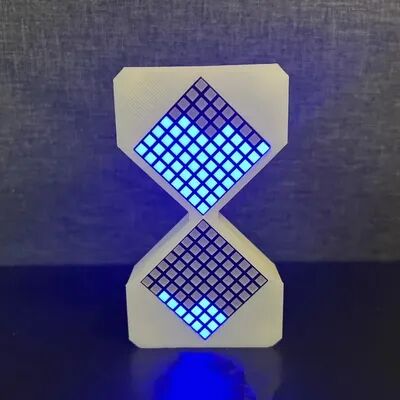
Youfap Market DIY Digital Cyber Hourglass Birthday Gift, Interactive LED Hourglass For Kids, Cyber Style With Glowing Technology square BlueTransform the ordinary into something extraordinary with the DIY Digital Cyber Hourglass! This innovative toy brings a futuristic glow to any room, making it the perfect birthday gift for kids who love unique, techinspired gadgets. With its striking...59,97 $*Shipping: 0,00 $Secure redirect to the provider
-
Uplifted Finds The Control Circle Archetype Social Worker Empowerment Canvas Executive Office & Wellness Sanctuary Decor 13 X 18 Cm No Frame"Inaugurate a grounding ""MindfulnessSanctuary"" energy in your environment with our ""Control Circle"" Archetype Canvas. This premium Social Worker and Mental Health professional print is the ultimate designer solution for creating a ""ClinicalModern"" or..."41,97 $*Shipping: 0,00 $Secure redirect to the provider
-
Braun Sensian 7 Forehead non-contact thermometer - Age Precision Technology - 3-in-1 Colour-Coded Digital Display - Baby and Child Friendly - BNT400B, New✅ Braun Sensian 7 Forehead Thermometer – BNT400B Model: BNT400B Type: Non-Contact Forehead Thermometer Technology: Age Precision™ Use: Baby, Child & Adult Take the stress out of temperature checks with the Braun Sensian 7 BNT400B Forehead Thermometer – the smart, gentle, and hygienic way to monitor your family’s health. ✅ No-Touch & Touch Mode Designed for maximum convenience, this thermometer offers dual measurement modes : No-touch mode : Read temperature without disturbing your child (ideal for sleeping babies). Touch mode : Simply place it gently on the forehead for a quick reading. ✅ Age Precision™ Technology Not all fevers are the same across age groups. With Braun’s unique Age Precision™ setting, you can select the age of the person (0-3 months, 3-36 months, or 36+ months), and the thermometer will interpret the reading accordingly to give a more accurate guidance. ✅ Colour-Coded Fever Guidance Quickly understand the result with a colour-coded digital display : ✅ Green – Normal temperature ⚠️ Yellow – Elevated temperature ❗ Red – High fever Perfect for giving you instant peace of mind when you need it most. ✅ 3-in-1 Functionality A truly versatile health device: Forehead temperature reading Object temperature – Check baby’s bottle, food, or bathwater Room temperature – Ensure the nursery is just right ✅ Silent Mode for Night-Time Checks Use the silent mode and backlit display to take readings in the dark without waking your child – ideal for late-night checks. ✅ Fast & Accurate Readings Delivers a precise result in just 2 seconds , powered by Braun’s trusted German-engineered sensor technology for clinical accuracy. ✅ Hygienic & Safe No probe covers needed Non-invasive and gentle – Ideal for babies and toddlers Easy to clean and use daily ✅ Ideal For: Parents with babies, toddlers, and young children Home use for all family members Safe, quick temperature checks without stress or discomfort Make health checks easier, faster, and more accurate with the Braun Sensian 7 BNT400B – your trusted partner in family wellness.37,49 £*Shipping: 0,00 £Secure redirect to the provider
-
What is the difference between frequency modulation and amplitude modulation?
Frequency modulation (FM) and amplitude modulation (AM) are two different methods used in radio broadcasting to carry a signal. The main difference between the two is how they vary the carrier wave to transmit information. In AM, the amplitude of the carrier wave is varied in proportion to that of the input signal, while in FM, the frequency of the carrier wave is varied. FM is known for its better sound quality and resistance to noise, while AM is simpler and has a longer range. **
-
What is the difference between amplitude modulation and frequency modulation?
Amplitude modulation (AM) is a method of encoding information on a carrier wave by varying its amplitude, while frequency modulation (FM) encodes information by varying the frequency of the carrier wave. In AM, the amplitude of the carrier wave is directly proportional to the amplitude of the input signal, whereas in FM, the frequency of the carrier wave is varied in proportion to the amplitude of the input signal. FM is less susceptible to noise and interference compared to AM, making it a more reliable method for transmitting information over long distances. **
-
How does modulation work?
Modulation is the process of varying a carrier signal's properties, such as its amplitude, frequency, or phase, in order to encode information onto it. This allows the carrier signal to carry the information over a communication channel. For example, in amplitude modulation (AM), the amplitude of the carrier signal is varied in accordance with the information signal. At the receiving end, the modulation is reversed through demodulation, allowing the original information to be recovered. Modulation is a fundamental concept in communication systems, allowing for the transmission of information over long distances. **
-
What is the meaning of digital PWM (Pulse Width Modulation)?
Digital PWM (Pulse Width Modulation) is a method used to control the amount of power delivered to a device by rapidly switching it on and off. The width of the on-time (duty cycle) determines the average power delivered to the device. In the digital context, PWM is achieved using digital signals and is commonly used in microcontrollers and digital signal processors to control the speed of motors, brightness of LEDs, and other applications requiring variable power control. This method allows for precise and efficient control of power delivery in digital systems. **
Similar search terms for Modulation
-
Usborne All About Feelings, Friends and Families My First Books 5 Book Set by Felicity Brooks – Feelings, Families, Diversity & Educational Learning CTitles In this Set All About Feelings: All About Families: All About Diversity: All About Friends: All About Worries and Fears: All About Feelings: How are you feeling today? This lively and engaging exploration of emotions helps young children learn to answer this important question. Topics covered include learning to describe feelings, how your feelings can change, and being kind to yourself. All About Families: What do families look like? Who’s in your family? And how can families change? With delightful illustrations, this glorious celebration of family diversity talks about lone-parent families, adoptive, foster, divorced, remarried, and mixed race families, and lots, lots more, showing little children that families come in all shapes and sizes. All About Diversity: This dynamic and joyous exploration of difference helps young children learn to respond in a kind and equal way to everyone, regardless of shape, size, age, physical and mental ability, gender, ethnicity, beliefs, language, culture, background, and so on. With topics ranging from clothes, music and food to homes, festivals and families. All About Friends: Why do we need friends? How can we make friends? And what makes a good friend? This charmingly illustrated book explores the benefits of having friends, looking at different types of friendships, and what happens when friends fall out and make up. All About Worries and Fears: There can be a lot to worry about when you are little, from monsters under the bed to Monday's maths test, but one person's scary spider is another's perfect pet, so how can we learn to stop everyday fears and worries from growing out of proportion or even overwhelming us?18,99 £*Shipping: 2,99 £Secure redirect to the provider
-
Graco Oasis Swing + Soothe Surround Technology - LandryNothing is better than Mom, but the Graco Soothe Surround technology mimics time-tested, proven methods that parents use to soothe their little ones within our Oasis Swing. Soothe Surround recreates these soothing techniques, like the middle of the...129,99 $*Shipping: 0,00 $Secure redirect to the provider
-
Chengdu Menghejia Technology Co., Ltd. Tent GoldTent Pegs set includes 20 x Tent Pegs, 1 x Hexagon socket, 1 x Tent peg puller, 1 x Portable carrying case. The camping pegs are 20cm long and 8mm in diameter, with thread details for stronger grip and adaptability to various surfaces Chengdu Menghejia Technology Co., Ltd.92,99 £*Shipping: 0,00 £Secure redirect to the provider
-
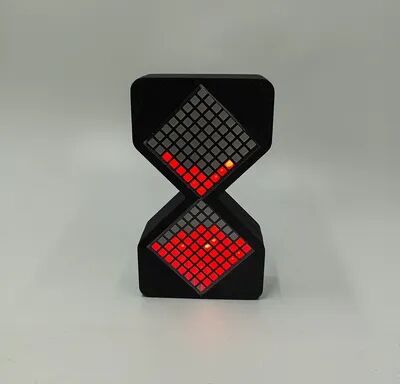
Youfap Market DIY Digital Cyber Hourglass Birthday Gift, Interactive LED Hourglass For Kids, Cyber Style With Glowing Technology square RedTransform the ordinary into something extraordinary with the DIY Digital Cyber Hourglass! This innovative toy brings a futuristic glow to any room, making it the perfect birthday gift for kids who love unique, techinspired gadgets. With its striking...59,97 $*Shipping: 0,00 $Secure redirect to the provider
-
What are the characteristics of modulation?
Modulation is the process of varying a carrier signal's properties, such as amplitude, frequency, or phase, in order to transmit information. The characteristics of modulation include the ability to encode information onto a carrier signal, allowing for efficient transmission over long distances. Modulation also enables multiple signals to be transmitted simultaneously over the same medium, known as multiplexing. Additionally, modulation allows for the signal to be easily demodulated and the original information to be recovered at the receiving end. **
-
What is the project Pulse Width Modulation?
Pulse Width Modulation (PWM) is a technique used to encode a message into a pulsing signal. It involves varying the width of the pulse while keeping the frequency constant. This method is commonly used in electronic devices to control the power supplied to electrical devices, such as motors, LEDs, and speakers. By adjusting the duty cycle of the pulse, PWM allows for precise control over the output voltage or current, making it an efficient way to regulate the speed or intensity of various components. **
-
What is the exact difference between source coding and channel coding in digital modulation?
Source coding and channel coding are two different processes in digital modulation. Source coding is the process of compressing the data to reduce the amount of information that needs to be transmitted. It aims to remove redundancy and irrelevant information from the source data. On the other hand, channel coding is the process of adding redundancy to the data before transmission in order to make it more resilient to errors that may occur during transmission. It aims to protect the data from noise and interference in the communication channel. In summary, source coding reduces the amount of data to be transmitted, while channel coding adds redundancy to protect the data during transmission. **
-
How can pulse width modulation be explained simply?
Pulse width modulation (PWM) is a method used to control the amount of power delivered to a load by varying the width of the pulse signal. In simple terms, PWM works by turning the power on and off at a fast rate, with the ratio of on-time to off-time determining the average power delivered. By adjusting this ratio, PWM can effectively control the speed of motors, brightness of LEDs, and other parameters in electronic systems. **
* All prices are inclusive of VAT and, if applicable, plus shipping costs. The offer information is based on the details provided by the respective shop and is updated through automated processes. Real-time updates do not occur, so deviations can occur in individual cases. ** Note: Parts of this content were created by AI.