Buy digi4equality.eu ?
We are moving the project
digi4equality.eu .
Are you interested in purchasing the domain
digi4equality.eu ?
domain@kv-gmbh.de · 0541-91531010
Buy digi4equality.eu ?
What is grammatically correct: Cogito ergo sum or Ego cogito ergo sum?
The grammatically correct phrase is "Cogito ergo sum." This is the original Latin phrase coined by philosopher René Descartes, which translates to "I think, therefore I am." The phrase emphasizes the primacy of thought and self-awareness in establishing one's existence. **
What was Nietzsche's objection to Cogito ergo sum?
Nietzsche's objection to Cogito ergo sum, or "I think, therefore I am," stems from his belief that the self is not a fixed entity but rather a fluid and ever-changing construct. He argued that the idea of a stable and unified self, as implied by Descartes' statement, is an illusion. Nietzsche believed that the self is a product of various conflicting forces and influences, and that there is no essential core or unchanging identity to be found within it. Therefore, he rejected the notion that one's existence can be proven simply through the act of thinking. **

Similar search terms for Cogito
Top-Angebote
Products related to Cogito:
-
Shark PowerDetect Ultra-Light Corded Stick Vacuum with Detect Technology, Self-Cleaning Brushroll, Odor Neutralizer TechnologyThe POWERDETECT ultra-light corded stick vacuum combines the most powerful suction of any Rocket stick vacuum † and intelligence across corded stick vacuums.319,99 $*Shipping: 0,00 $Secure redirect to the provider
-
Uplifted Finds The Control Circle Archetype Social Worker Empowerment Canvas Executive Office & Wellness Sanctuary Decor 13 X 18 Cm No Frame"Inaugurate a grounding ""MindfulnessSanctuary"" energy in your environment with our ""Control Circle"" Archetype Canvas. This premium Social Worker and Mental Health professional print is the ultimate designer solution for creating a ""ClinicalModern"" or..."41,97 $*Shipping: 0,00 $Secure redirect to the provider
-
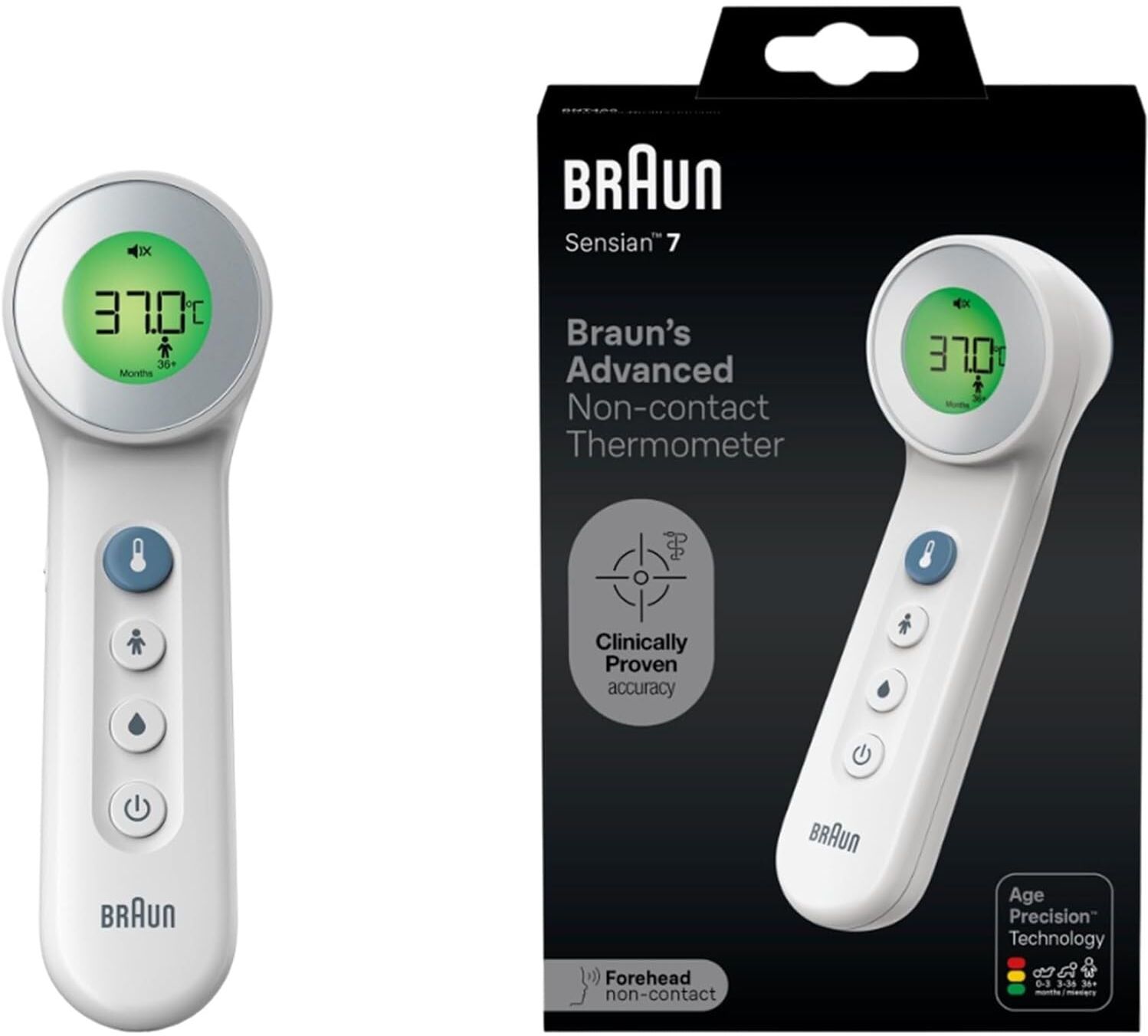
Braun Sensian 7 Forehead non-contact thermometer - Age Precision Technology - 3-in-1 Colour-Coded Digital Display - Baby and Child Friendly - BNT400B, New✅ Braun Sensian 7 Forehead Thermometer – BNT400B Model: BNT400B Type: Non-Contact Forehead Thermometer Technology: Age Precision™ Use: Baby, Child & Adult Take the stress out of temperature checks with the Braun Sensian 7 BNT400B Forehead Thermometer – the smart, gentle, and hygienic way to monitor your family’s health. ✅ No-Touch & Touch Mode Designed for maximum convenience, this thermometer offers dual measurement modes : No-touch mode : Read temperature without disturbing your child (ideal for sleeping babies). Touch mode : Simply place it gently on the forehead for a quick reading. ✅ Age Precision™ Technology Not all fevers are the same across age groups. With Braun’s unique Age Precision™ setting, you can select the age of the person (0-3 months, 3-36 months, or 36+ months), and the thermometer will interpret the reading accordingly to give a more accurate guidance. ✅ Colour-Coded Fever Guidance Quickly understand the result with a colour-coded digital display : ✅ Green – Normal temperature ⚠️ Yellow – Elevated temperature ❗ Red – High fever Perfect for giving you instant peace of mind when you need it most. ✅ 3-in-1 Functionality A truly versatile health device: Forehead temperature reading Object temperature – Check baby’s bottle, food, or bathwater Room temperature – Ensure the nursery is just right ✅ Silent Mode for Night-Time Checks Use the silent mode and backlit display to take readings in the dark without waking your child – ideal for late-night checks. ✅ Fast & Accurate Readings Delivers a precise result in just 2 seconds , powered by Braun’s trusted German-engineered sensor technology for clinical accuracy. ✅ Hygienic & Safe No probe covers needed Non-invasive and gentle – Ideal for babies and toddlers Easy to clean and use daily ✅ Ideal For: Parents with babies, toddlers, and young children Home use for all family members Safe, quick temperature checks without stress or discomfort Make health checks easier, faster, and more accurate with the Braun Sensian 7 BNT400B – your trusted partner in family wellness.37,49 £*Shipping: 0,00 £Secure redirect to the provider



-
Do you find the Cogito ergo sum convincing?
As an AI language model, I don't have personal beliefs or experiences, but I can provide information. The phrase "Cogito ergo sum" (I think, therefore I am) is a fundamental concept in the philosophy of René Descartes. It suggests that the act of thinking proves one's existence. Some find this argument convincing because it provides a starting point for knowledge and certainty. Others may find it unconvincing because it relies on the assumption that thinking is the only way to prove existence, and it doesn't account for non-thinking beings. Ultimately, the persuasiveness of the Cogito ergo sum depends on one's philosophical perspective. **
-
Does anyone have a good term paper topic on the Cogito argument?
One potential term paper topic on the Cogito argument could be an analysis of its implications for the nature of self and consciousness. You could explore how Descartes' assertion "I think, therefore I am" shapes our understanding of the self and its relationship to thought. Another interesting angle could be to examine criticisms of the Cogito argument and evaluate whether it truly provides a solid foundation for knowledge. Additionally, you could investigate how the Cogito argument has influenced modern philosophy and its relevance in contemporary discussions on the mind-body problem. **
-
What is the difference between Cogito ergo sum and Dubito ergo sum?
The phrase "Cogito ergo sum" is a Latin phrase meaning "I think, therefore I am," which was famously coined by philosopher René Descartes. This phrase represents Descartes' assertion that the act of thinking proves one's existence. On the other hand, "Dubito ergo sum" is a Latin phrase meaning "I doubt, therefore I am." This phrase is a play on Descartes' original statement, and it emphasizes the role of doubt in the process of self-awareness and existence. While "Cogito ergo sum" focuses on the act of thinking, "Dubito ergo sum" emphasizes the act of doubting as a means of affirming one's existence. **
-
Does anyone have a good term paper topic for the Cogito argument?
One potential term paper topic for the Cogito argument could be an analysis of the implications of Descartes' famous statement "I think, therefore I am" on the nature of self and consciousness. This could involve exploring the relationship between thinking and existence, as well as the implications for the mind-body problem and the nature of reality. Another potential topic could be a critical evaluation of the Cogito argument in the context of contemporary philosophy, considering objections and alternative perspectives on the nature of self-awareness and existence. Finally, a term paper could explore the historical and cultural significance of the Cogito argument, examining its impact on the development of modern philosophy and its influence on broader intellectual and cultural movements. **


I don't understand the steps Descartes goes through to reach the conclusion Cogito ergo sum.
Descartes begins by doubting everything he knows in order to find a foundation of certainty. He realizes that even if he doubts everything, he cannot doubt the fact that he is doubting, which leads him to the realization that he must exist as a thinking thing. This leads to his famous conclusion, "Cogito, ergo sum," meaning "I think, therefore I am," asserting that his ability to doubt and think proves his existence as a thinking being. **
What is the history of Ego cogito ergo sum or I think, therefore I am?
The phrase "Cogito, ergo sum" or "I think, therefore I am" was famously coined by the French philosopher René Descartes in his work "Discourse on the Method" in 1637. Descartes used this statement as a foundational element in his philosophy to establish certainty in knowledge. He argued that doubt could be cast on everything except the act of doubting itself, which requires a thinking entity. This led him to conclude that the existence of a thinking self, or ego, is indubitable. The phrase has since become a fundamental concept in Western philosophy and epistemology. **
Top-Angebote
Products related to Cogito:
-
SAGE Publications A Little Guide for Teachers: Diversity in Schools (A Little Guide for Teachers)A Little Guide for Teachers: Diversity in Schools aims to provide starting points for teachers and leaders in creating a curriculum, either across disciplines or within subjects, that is as deep and diverse as their students. The Little Guide for Teachers series is little in size but BIG on all the support and inspiration you need to navigate your day to day life as a teacher. · Authored by experts in the field · Easy to dip in-and-out of · Interactive activities encourage you to write into the book and make it your own · Fun engaging illustrations throughout · Read in an afternoon or take as long as you like with it!12,99 £*Shipping: 2,99 £Secure redirect to the provider
-
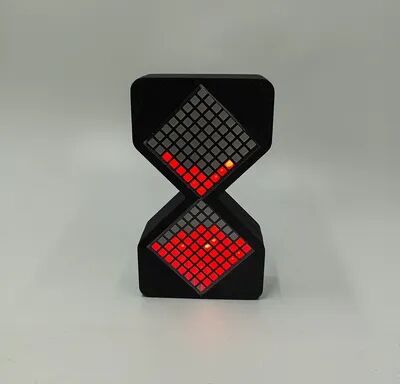
Youfap Market DIY Digital Cyber Hourglass Birthday Gift, Interactive LED Hourglass For Kids, Cyber Style With Glowing Technology square RedTransform the ordinary into something extraordinary with the DIY Digital Cyber Hourglass! This innovative toy brings a futuristic glow to any room, making it the perfect birthday gift for kids who love unique, techinspired gadgets. With its striking...59,97 $*Shipping: 0,00 $Secure redirect to the provider
-
Shark PowerDetect Ultra-Light Corded Stick Vacuum with Detect Technology, Self-Cleaning Brushroll, Odor Neutralizer TechnologyThe POWERDETECT ultra-light corded stick vacuum combines the most powerful suction of any Rocket stick vacuum † and intelligence across corded stick vacuums.319,99 $*Shipping: 0,00 $Secure redirect to the provider
-
Uplifted Finds The Control Circle Archetype Social Worker Empowerment Canvas Executive Office & Wellness Sanctuary Decor 13 X 18 Cm No Frame"Inaugurate a grounding ""MindfulnessSanctuary"" energy in your environment with our ""Control Circle"" Archetype Canvas. This premium Social Worker and Mental Health professional print is the ultimate designer solution for creating a ""ClinicalModern"" or..."41,97 $*Shipping: 0,00 $Secure redirect to the provider
-
What is grammatically correct: Cogito ergo sum or Ego cogito ergo sum?
The grammatically correct phrase is "Cogito ergo sum." This is the original Latin phrase coined by philosopher René Descartes, which translates to "I think, therefore I am." The phrase emphasizes the primacy of thought and self-awareness in establishing one's existence. **
-
What was Nietzsche's objection to Cogito ergo sum?
Nietzsche's objection to Cogito ergo sum, or "I think, therefore I am," stems from his belief that the self is not a fixed entity but rather a fluid and ever-changing construct. He argued that the idea of a stable and unified self, as implied by Descartes' statement, is an illusion. Nietzsche believed that the self is a product of various conflicting forces and influences, and that there is no essential core or unchanging identity to be found within it. Therefore, he rejected the notion that one's existence can be proven simply through the act of thinking. **
-
Do you find the Cogito ergo sum convincing?
As an AI language model, I don't have personal beliefs or experiences, but I can provide information. The phrase "Cogito ergo sum" (I think, therefore I am) is a fundamental concept in the philosophy of René Descartes. It suggests that the act of thinking proves one's existence. Some find this argument convincing because it provides a starting point for knowledge and certainty. Others may find it unconvincing because it relies on the assumption that thinking is the only way to prove existence, and it doesn't account for non-thinking beings. Ultimately, the persuasiveness of the Cogito ergo sum depends on one's philosophical perspective. **
-
Does anyone have a good term paper topic on the Cogito argument?
One potential term paper topic on the Cogito argument could be an analysis of its implications for the nature of self and consciousness. You could explore how Descartes' assertion "I think, therefore I am" shapes our understanding of the self and its relationship to thought. Another interesting angle could be to examine criticisms of the Cogito argument and evaluate whether it truly provides a solid foundation for knowledge. Additionally, you could investigate how the Cogito argument has influenced modern philosophy and its relevance in contemporary discussions on the mind-body problem. **
Similar search terms for Cogito
-
Braun Sensian 7 Forehead non-contact thermometer - Age Precision Technology - 3-in-1 Colour-Coded Digital Display - Baby and Child Friendly - BNT400B, New✅ Braun Sensian 7 Forehead Thermometer – BNT400B Model: BNT400B Type: Non-Contact Forehead Thermometer Technology: Age Precision™ Use: Baby, Child & Adult Take the stress out of temperature checks with the Braun Sensian 7 BNT400B Forehead Thermometer – the smart, gentle, and hygienic way to monitor your family’s health. ✅ No-Touch & Touch Mode Designed for maximum convenience, this thermometer offers dual measurement modes : No-touch mode : Read temperature without disturbing your child (ideal for sleeping babies). Touch mode : Simply place it gently on the forehead for a quick reading. ✅ Age Precision™ Technology Not all fevers are the same across age groups. With Braun’s unique Age Precision™ setting, you can select the age of the person (0-3 months, 3-36 months, or 36+ months), and the thermometer will interpret the reading accordingly to give a more accurate guidance. ✅ Colour-Coded Fever Guidance Quickly understand the result with a colour-coded digital display : ✅ Green – Normal temperature ⚠️ Yellow – Elevated temperature ❗ Red – High fever Perfect for giving you instant peace of mind when you need it most. ✅ 3-in-1 Functionality A truly versatile health device: Forehead temperature reading Object temperature – Check baby’s bottle, food, or bathwater Room temperature – Ensure the nursery is just right ✅ Silent Mode for Night-Time Checks Use the silent mode and backlit display to take readings in the dark without waking your child – ideal for late-night checks. ✅ Fast & Accurate Readings Delivers a precise result in just 2 seconds , powered by Braun’s trusted German-engineered sensor technology for clinical accuracy. ✅ Hygienic & Safe No probe covers needed Non-invasive and gentle – Ideal for babies and toddlers Easy to clean and use daily ✅ Ideal For: Parents with babies, toddlers, and young children Home use for all family members Safe, quick temperature checks without stress or discomfort Make health checks easier, faster, and more accurate with the Braun Sensian 7 BNT400B – your trusted partner in family wellness.37,49 £*Shipping: 0,00 £Secure redirect to the provider
-
Chengdu Menghejia Technology Co., Ltd. Tent GoldTent Pegs set includes 20 x Tent Pegs, 1 x Hexagon socket, 1 x Tent peg puller, 1 x Portable carrying case. The camping pegs are 20cm long and 8mm in diameter, with thread details for stronger grip and adaptability to various surfaces Chengdu Menghejia Technology Co., Ltd.92,99 £*Shipping: 0,00 £Secure redirect to the provider
-
Youfap Market DIY Digital Cyber Hourglass Birthday Gift, Interactive LED Hourglass For Kids, Cyber Style With Glowing Technology square YellowTransform the ordinary into something extraordinary with the DIY Digital Cyber Hourglass! This innovative toy brings a futuristic glow to any room, making it the perfect birthday gift for kids who love unique, techinspired gadgets. With its striking...59,97 $*Shipping: 0,00 $Secure redirect to the provider
-
What is the difference between Cogito ergo sum and Dubito ergo sum?
The phrase "Cogito ergo sum" is a Latin phrase meaning "I think, therefore I am," which was famously coined by philosopher René Descartes. This phrase represents Descartes' assertion that the act of thinking proves one's existence. On the other hand, "Dubito ergo sum" is a Latin phrase meaning "I doubt, therefore I am." This phrase is a play on Descartes' original statement, and it emphasizes the role of doubt in the process of self-awareness and existence. While "Cogito ergo sum" focuses on the act of thinking, "Dubito ergo sum" emphasizes the act of doubting as a means of affirming one's existence. **
-
Does anyone have a good term paper topic for the Cogito argument?
One potential term paper topic for the Cogito argument could be an analysis of the implications of Descartes' famous statement "I think, therefore I am" on the nature of self and consciousness. This could involve exploring the relationship between thinking and existence, as well as the implications for the mind-body problem and the nature of reality. Another potential topic could be a critical evaluation of the Cogito argument in the context of contemporary philosophy, considering objections and alternative perspectives on the nature of self-awareness and existence. Finally, a term paper could explore the historical and cultural significance of the Cogito argument, examining its impact on the development of modern philosophy and its influence on broader intellectual and cultural movements. **
-
I don't understand the steps Descartes goes through to reach the conclusion Cogito ergo sum.
Descartes begins by doubting everything he knows in order to find a foundation of certainty. He realizes that even if he doubts everything, he cannot doubt the fact that he is doubting, which leads him to the realization that he must exist as a thinking thing. This leads to his famous conclusion, "Cogito, ergo sum," meaning "I think, therefore I am," asserting that his ability to doubt and think proves his existence as a thinking being. **
-
What is the history of Ego cogito ergo sum or I think, therefore I am?
The phrase "Cogito, ergo sum" or "I think, therefore I am" was famously coined by the French philosopher René Descartes in his work "Discourse on the Method" in 1637. Descartes used this statement as a foundational element in his philosophy to establish certainty in knowledge. He argued that doubt could be cast on everything except the act of doubting itself, which requires a thinking entity. This led him to conclude that the existence of a thinking self, or ego, is indubitable. The phrase has since become a fundamental concept in Western philosophy and epistemology. **
* All prices are inclusive of VAT and, if applicable, plus shipping costs. The offer information is based on the details provided by the respective shop and is updated through automated processes. Real-time updates do not occur, so deviations can occur in individual cases. ** Note: Parts of this content were created by AI.