Buy digi4equality.eu ?
We are moving the project
digi4equality.eu .
Are you interested in purchasing the domain
digi4equality.eu ?
domain@kv-gmbh.de · 0541-91531010
Buy digi4equality.eu ?
Why does MgCl2 turn into MgCl2 in the redox reaction? Please explain.
In a redox reaction, MgCl2 turns into Mg and Cl2 because magnesium (Mg) is oxidized, losing two electrons to form Mg2+ ions, while chlorine (Cl) is reduced, gaining electrons to form Cl- ions. This transfer of electrons from magnesium to chlorine results in the formation of magnesium ions and chlorine gas. This process occurs because magnesium has a tendency to lose electrons to achieve a stable electron configuration, while chlorine has a tendency to gain electrons to achieve a stable electron configuration. **
Why is MgCl2 an ionic bond?
MgCl2 is an ionic bond because it is formed between a metal (Mg) and a non-metal (Cl). In this bond, the metal atom (Mg) loses electrons to become a positively charged ion, while the non-metal atoms (Cl) gain electrons to become negatively charged ions. The resulting attraction between the positively and negatively charged ions forms the ionic bond in MgCl2. **

Similar search terms for MgCl2
Top-Angebote
Products related to MgCl2:
-
Magnum Technology AG0547MT Shock absorberShock Absorber Design: Suspension Strut; Shock Absorber System: Twin-Tube; Shock Absorber Type: Gas Pressure; Parameter: SFE30X; Fitting Position: Front Axle Right; Shock Absorber Mounting Type: Top pin; Suspension: for vehicles with standard suspension; for OE number: 54661-2L000, 54661-2L100, 54661-2L200, 54661-2L500, 54661-2L60051,99 £*Shipping: 8,45 £Secure redirect to the provider
-
Magnum Technology M0122 Shock absorberFitting Position: Rear Axle, Front Axle Left, Front Axle Right; Shock Absorber Type: Oil Pressure; Shock Absorber Mounting Type: Top eye, Bottom eye; Length 2 [mm]: 520,8, 865,5; Shock Absorber Design: Telescopic Shock Absorber155,98 £*Shipping: 8,45 £Secure redirect to the provider
-
Magnum Technology APM025MT Shock absorberShock Absorber Type: Oil Pressure; Shock Absorber Mounting Type: Top yoke; Shock Absorber Design: Telescopic Shock Absorber; Fitting Position: Rear Axle Left; Vehicle Equipment Line/Trim Level: Airmatic; Braking/Driving Dynamics: for vehicles with ADS407,99 £*Shipping: 1,99 £Secure redirect to the provider




-
What is the equivalent weight of MgCl2?
The equivalent weight of MgCl2 is the molecular weight divided by the valence of the cation. The molecular weight of MgCl2 is 95.21 g/mol, and the valence of Mg is 2. Therefore, the equivalent weight of MgCl2 is 95.21 g/mol / 2 = 47.605 g/equiv. **
-
How does the molten salt electrolysis of MgCl2 work?
In the molten salt electrolysis of MgCl2, solid magnesium chloride is melted to form a liquid electrolyte. This electrolyte allows the flow of electric current between two electrodes, typically made of graphite. When an electric current is passed through the molten MgCl2, magnesium ions migrate towards the cathode (negative electrode) where they gain electrons and are reduced to form molten magnesium metal. Chloride ions migrate towards the anode (positive electrode) where they lose electrons and are oxidized to form chlorine gas. This process allows for the production of pure magnesium metal from magnesium chloride. **
-
What is the bond particle change of MgCl2 + H2?
The bond particle change of MgCl2 + H2 is a chemical reaction in which magnesium chloride (MgCl2) reacts with hydrogen gas (H2) to form magnesium metal (Mg) and hydrogen chloride gas (HCl). The balanced chemical equation for this reaction is: MgCl2 + H2 -> Mg + 2HCl In this reaction, the magnesium chloride molecule (MgCl2) is broken down into its constituent ions, Mg2+ and 2Cl-, while the hydrogen molecule (H2) is broken down into two hydrogen atoms. The magnesium ions then react with the hydrogen atoms to form magnesium metal, while the chloride ions react with the hydrogen atoms to form hydrogen chloride gas. **
-
How many moles of Mg are contained in 48g of MgCl2?
To determine the number of moles of Mg in 48g of MgCl2, we first need to calculate the molar mass of MgCl2. The molar mass of MgCl2 is 95.21 g/mol. Next, we need to find the molar ratio of Mg to MgCl2, which is 1:1. Therefore, the number of moles of Mg in 48g of MgCl2 is 48g / 95.21 g/mol = 0.504 moles. **


Why is the melting point of MgCl2 lower than that of NaCl?
The melting point of a compound is influenced by the strength of the bonds between the atoms within the compound. In the case of MgCl2 and NaCl, both are ionic compounds composed of metal cations and chloride anions. However, MgCl2 has a lower melting point than NaCl because magnesium cations have a lower charge density compared to sodium cations, resulting in weaker electrostatic forces of attraction between the ions in MgCl2. This weaker bond strength in MgCl2 leads to a lower melting point compared to NaCl. **
What is Digital Technology 2?
Digital Technology 2 is a course that builds upon the foundational concepts introduced in Digital Technology 1. It delves deeper into topics such as programming, web development, data analysis, and cybersecurity. Students will further develop their skills in using digital tools and technologies to solve real-world problems and gain a more advanced understanding of how technology impacts society. The course aims to prepare students for a career in the rapidly evolving field of digital technology. **
Top-Angebote
Products related to MgCl2:
-
SAGE Publications A Little Guide for Teachers: Diversity in Schools (A Little Guide for Teachers)A Little Guide for Teachers: Diversity in Schools aims to provide starting points for teachers and leaders in creating a curriculum, either across disciplines or within subjects, that is as deep and diverse as their students. The Little Guide for Teachers series is little in size but BIG on all the support and inspiration you need to navigate your day to day life as a teacher. · Authored by experts in the field · Easy to dip in-and-out of · Interactive activities encourage you to write into the book and make it your own · Fun engaging illustrations throughout · Read in an afternoon or take as long as you like with it!12,99 £*Shipping: 2,99 £Secure redirect to the provider
-
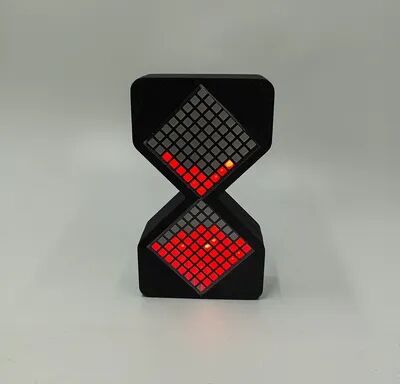
Youfap Market DIY Digital Cyber Hourglass Birthday Gift, Interactive LED Hourglass For Kids, Cyber Style With Glowing Technology square RedTransform the ordinary into something extraordinary with the DIY Digital Cyber Hourglass! This innovative toy brings a futuristic glow to any room, making it the perfect birthday gift for kids who love unique, techinspired gadgets. With its striking...59,97 $*Shipping: 0,00 $Secure redirect to the provider
-
Magnum Technology AG0547MT Shock absorberShock Absorber Design: Suspension Strut; Shock Absorber System: Twin-Tube; Shock Absorber Type: Gas Pressure; Parameter: SFE30X; Fitting Position: Front Axle Right; Shock Absorber Mounting Type: Top pin; Suspension: for vehicles with standard suspension; for OE number: 54661-2L000, 54661-2L100, 54661-2L200, 54661-2L500, 54661-2L60051,99 £*Shipping: 8,45 £Secure redirect to the provider
-
Magnum Technology M0122 Shock absorberFitting Position: Rear Axle, Front Axle Left, Front Axle Right; Shock Absorber Type: Oil Pressure; Shock Absorber Mounting Type: Top eye, Bottom eye; Length 2 [mm]: 520,8, 865,5; Shock Absorber Design: Telescopic Shock Absorber155,98 £*Shipping: 8,45 £Secure redirect to the provider
-
Why does MgCl2 turn into MgCl2 in the redox reaction? Please explain.
In a redox reaction, MgCl2 turns into Mg and Cl2 because magnesium (Mg) is oxidized, losing two electrons to form Mg2+ ions, while chlorine (Cl) is reduced, gaining electrons to form Cl- ions. This transfer of electrons from magnesium to chlorine results in the formation of magnesium ions and chlorine gas. This process occurs because magnesium has a tendency to lose electrons to achieve a stable electron configuration, while chlorine has a tendency to gain electrons to achieve a stable electron configuration. **
-
Why is MgCl2 an ionic bond?
MgCl2 is an ionic bond because it is formed between a metal (Mg) and a non-metal (Cl). In this bond, the metal atom (Mg) loses electrons to become a positively charged ion, while the non-metal atoms (Cl) gain electrons to become negatively charged ions. The resulting attraction between the positively and negatively charged ions forms the ionic bond in MgCl2. **
-
What is the equivalent weight of MgCl2?
The equivalent weight of MgCl2 is the molecular weight divided by the valence of the cation. The molecular weight of MgCl2 is 95.21 g/mol, and the valence of Mg is 2. Therefore, the equivalent weight of MgCl2 is 95.21 g/mol / 2 = 47.605 g/equiv. **
-
How does the molten salt electrolysis of MgCl2 work?
In the molten salt electrolysis of MgCl2, solid magnesium chloride is melted to form a liquid electrolyte. This electrolyte allows the flow of electric current between two electrodes, typically made of graphite. When an electric current is passed through the molten MgCl2, magnesium ions migrate towards the cathode (negative electrode) where they gain electrons and are reduced to form molten magnesium metal. Chloride ions migrate towards the anode (positive electrode) where they lose electrons and are oxidized to form chlorine gas. This process allows for the production of pure magnesium metal from magnesium chloride. **
Similar search terms for MgCl2
-
Magnum Technology APM025MT Shock absorberShock Absorber Type: Oil Pressure; Shock Absorber Mounting Type: Top yoke; Shock Absorber Design: Telescopic Shock Absorber; Fitting Position: Rear Axle Left; Vehicle Equipment Line/Trim Level: Airmatic; Braking/Driving Dynamics: for vehicles with ADS407,99 £*Shipping: 1,99 £Secure redirect to the provider
-
Magnum Technology SB132 Coil springFitting Position: Rear Axle; Parameter: E; Spring Design: Coil Spring; Thickness 1 [mm]: 13,2; Outer Diameter [mm]: 121; Length [mm]: 377; Diameter: 13,25; Vehicle Equipment: for vehicles with trailer hitch; Suspension: for vehicles without sports suspension99,98 £*Shipping: 8,45 £Secure redirect to the provider
-
Youfap Market DIY Digital Cyber Hourglass Birthday Gift, Interactive LED Hourglass For Kids, Cyber Style With Glowing Technology square BlueTransform the ordinary into something extraordinary with the DIY Digital Cyber Hourglass! This innovative toy brings a futuristic glow to any room, making it the perfect birthday gift for kids who love unique, techinspired gadgets. With its striking...59,97 $*Shipping: 0,00 $Secure redirect to the provider
-
What is the bond particle change of MgCl2 + H2?
The bond particle change of MgCl2 + H2 is a chemical reaction in which magnesium chloride (MgCl2) reacts with hydrogen gas (H2) to form magnesium metal (Mg) and hydrogen chloride gas (HCl). The balanced chemical equation for this reaction is: MgCl2 + H2 -> Mg + 2HCl In this reaction, the magnesium chloride molecule (MgCl2) is broken down into its constituent ions, Mg2+ and 2Cl-, while the hydrogen molecule (H2) is broken down into two hydrogen atoms. The magnesium ions then react with the hydrogen atoms to form magnesium metal, while the chloride ions react with the hydrogen atoms to form hydrogen chloride gas. **
-
How many moles of Mg are contained in 48g of MgCl2?
To determine the number of moles of Mg in 48g of MgCl2, we first need to calculate the molar mass of MgCl2. The molar mass of MgCl2 is 95.21 g/mol. Next, we need to find the molar ratio of Mg to MgCl2, which is 1:1. Therefore, the number of moles of Mg in 48g of MgCl2 is 48g / 95.21 g/mol = 0.504 moles. **
-
Why is the melting point of MgCl2 lower than that of NaCl?
The melting point of a compound is influenced by the strength of the bonds between the atoms within the compound. In the case of MgCl2 and NaCl, both are ionic compounds composed of metal cations and chloride anions. However, MgCl2 has a lower melting point than NaCl because magnesium cations have a lower charge density compared to sodium cations, resulting in weaker electrostatic forces of attraction between the ions in MgCl2. This weaker bond strength in MgCl2 leads to a lower melting point compared to NaCl. **
-
What is Digital Technology 2?
Digital Technology 2 is a course that builds upon the foundational concepts introduced in Digital Technology 1. It delves deeper into topics such as programming, web development, data analysis, and cybersecurity. Students will further develop their skills in using digital tools and technologies to solve real-world problems and gain a more advanced understanding of how technology impacts society. The course aims to prepare students for a career in the rapidly evolving field of digital technology. **
* All prices are inclusive of VAT and, if applicable, plus shipping costs. The offer information is based on the details provided by the respective shop and is updated through automated processes. Real-time updates do not occur, so deviations can occur in individual cases. ** Note: Parts of this content were created by AI.